From Self-Doubt to Self-Belief: A Personal Story
Small, steady acts of courage beat self-doubt: grow confidence by practicing micro-challenges, journaling, and self-compassion.


Self-doubt can hold you back in ways you don’t even realize. It whispers that you’re not good enough, keeps you from taking risks, and makes you second-guess your every move. But moving past it isn’t about perfection - it’s about taking small, consistent steps toward trusting yourself.
Here’s what you’ll learn from this journey:
- How self-doubt begins: Often shaped by early experiences and reinforced by fear of failure.
- How it affects life: Limits opportunities, strains relationships, and creates a cycle of avoidance.
- The turning point: Recognizing that fear of trying is more damaging than failure itself.
- Building self-belief: Start small, challenge negative thoughts, and take action even when it’s uncomfortable.
This story isn’t about a sudden transformation. It’s about small, deliberate choices that lead to lasting change. Confidence isn’t something you’re born with - it’s something you build, one step at a time.
Early Struggles and Where Self-Doubt Began
Childhood Experiences That Created Self-Doubt
Self-doubt didn’t appear overnight - it was built, piece by piece, in a home where results mattered more than effort. Every A-minus on a report card or minor mistake seemed to confirm that I wasn’t measuring up. When you hear phrases like “stay in your lane” often enough, you start to believe your options are far more limited than everyone else's.
The constant criticism at home eventually turned into my own internal voice. I no longer needed anyone else to point out my flaws - I was doing it for them. That voice became a relentless whisper in the back of my mind: Don’t bother trying. You’ll fail. Everyone will see you’re not good enough.
What made it even harder was watching others succeed with what seemed like ease while I struggled privately. I found myself comparing my messy, behind-the-scenes struggles to their polished, public triumphs. The more I compared, the more convinced I became that I was falling short in every way.
These early messages didn’t just linger - they began to dictate how I approached the world.
How Self-Doubt Affected Daily Life
This ingrained self-doubt didn’t stay confined to my thoughts; it seeped into my everyday life, shaping how I lived and the choices I made.
I gravitated toward “safe” jobs that left me drained because I was too afraid to aim for something bigger. When leadership opportunities came my way, I turned them down, terrified that I’d be exposed as inadequate. The fear of failure loomed so large that it kept me from even trying.
In my personal relationships, I struggled to express my needs. I withdrew, trying to shield myself from potential rejection, but that only deepened my feelings of isolation. I second-guessed every interaction, replaying conversations in my head and picking apart every word. Over time, I became a bystander in my own life, watching from the sidelines rather than stepping into the action.
As one individual put it: “I didn’t want to be seen ‘trying and failing,’ so I often didn’t try at all”. That avoidance became a trap, robbing me of any chance to prove to myself that I could succeed. Instead of building confidence, I stayed stuck, reinforcing the very doubts I so desperately wanted to escape.
sbb-itb-ba81f5d
Rock Bottom: The Moment Everything Changed
The Mental and Emotional Weight of Self-Doubt
By this point, self-doubt wasn’t just a fleeting thought - it felt like a constant shadow. My hands would tremble, and my voice would falter even during the simplest conversations. Before speaking, I’d rehearse every word in my head, trying to script away any chance of stumbling or embarrassment.
But this wasn’t just about being tired. It was a deep exhaustion from holding myself back, from shrinking into the background of every room I entered. I felt like an impostor, convinced that any success I achieved was undeserved. As Majid Ali so aptly described it:
Self-doubt doesn't announce itself loudly. It whispers. 'You're not smart enough.' 'You'll fail again.' 'Don't try - they'll judge you.'
Oddly enough, it wasn’t the fear of failure that hurt the most - it was the emptiness of not even trying. I felt disconnected, like life was happening around me while I stood still. Late at night, I’d scroll through social media, comparing my messy, imperfect life to the curated perfection of others. Every post seemed to remind me how far behind I was, compounding the weight of my insecurities.
All of that pressure, all of that self-imposed limitation, finally boiled over in one defining moment.
The Event That Sparked Change
It happened during a team meeting in late 2021. My manager asked for someone to present our quarterly results to the executives. I had spent weeks preparing that analysis - I knew every number, every trend, every insight better than anyone else in the room. But when the opportunity came, I froze. I couldn’t bring myself to speak.
Instead, a newer colleague stepped up. He used my analysis, presented it with confidence, and earned glowing praise from leadership. Two weeks later, he was promoted to the position I’d been working toward for months. The words of A S M Rajib Hassan Choudhury echoed in my mind:
My self-doubt wasn't just limiting my career - it was stealing opportunities I had earned.
That moment hit me like a ton of bricks. It wasn’t external factors or other people holding me back - it was me. I wasn’t afraid of failing; I was afraid of being seen trying. But my fear of visibility had cost me something real, something I had worked so hard for.
That loss forced me to make a choice: continue living as a bystander in my own life, or finally step forward and take a shot.
Readiness, I realized, is often a decision - not a feeling.
I didn’t feel ready. But I knew I couldn’t keep waiting for confidence to magically appear. It was time to act, even if I wasn’t sure I could succeed.
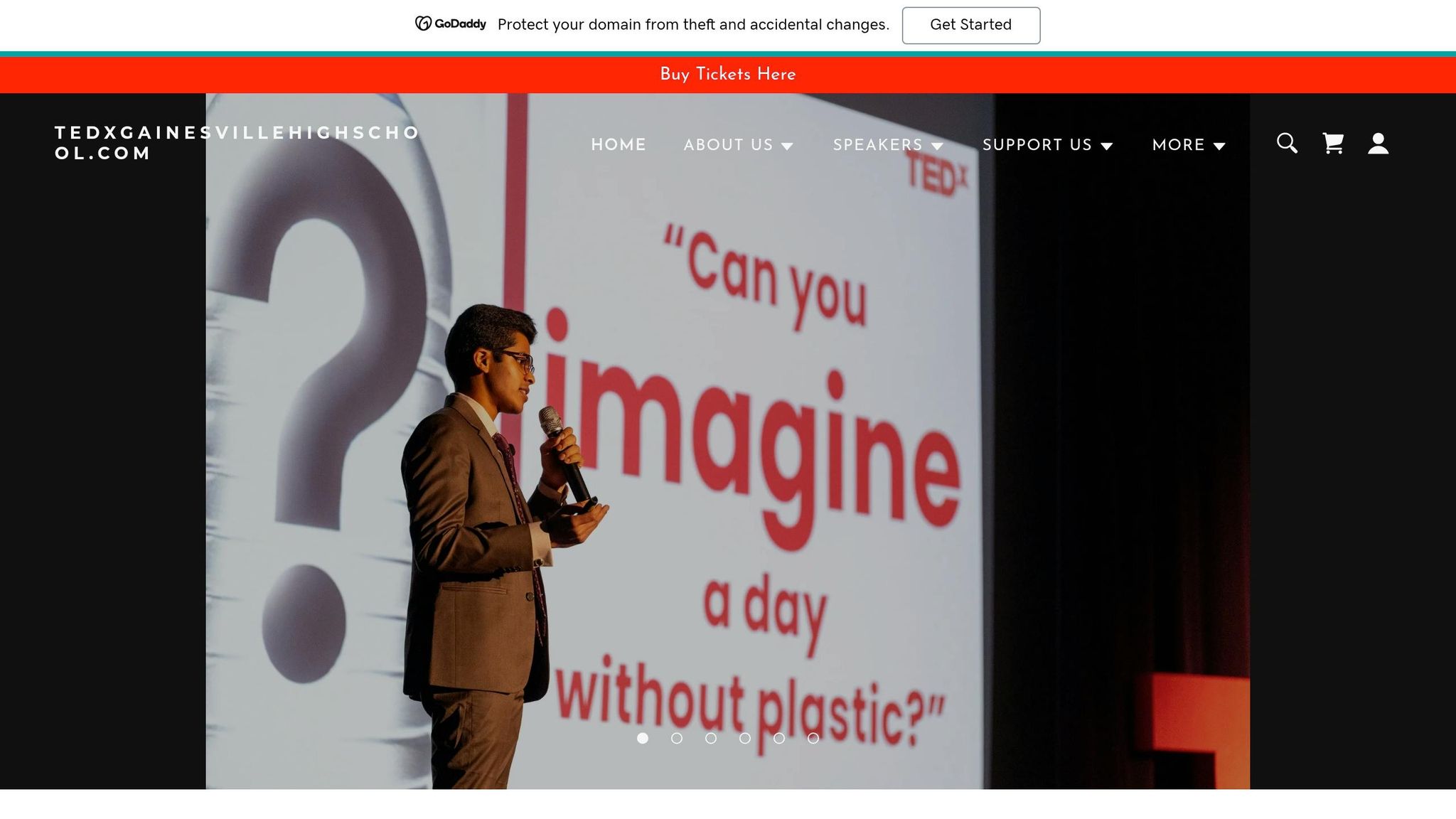
A Story of Self-Confidence, Doubt to Determination. | Sandhya Kasala | TEDxGainesville High School
The Transformation: How I Built Self-Belief
Self-Doubt vs Self-Belief: 5 Key Behavioral Shifts
That pivotal moment pushed me to confront my inner barriers and carve out a new path forward.
Practices That Built Resilience
I started small, tackling what I call "micro-challenges." These were tiny steps that helped me prove my inner critic wrong. For example, I made eye contact with the barista at my local coffee shop - a simple act that felt monumental at the time. I even managed to ask a question during a team meeting, despite my hands trembling. These small, consistent actions began to chip away at the voice in my head that doubted me.
Another tool I leaned on was a Confidence Portfolio. This was a log where I recorded every compliment, achievement, and piece of positive feedback I received. Whether it was a kind word about my work or successfully completing a tough task, I wrote it down. This wasn’t about inflating my ego; it was a way to counterbalance my natural tendency to focus on failures while ignoring successes.
Journaling also became a lifeline. I used it to capture every harsh thought and then systematically challenge it. For instance, when I thought, "You're not good enough", I asked myself, "What evidence do I have for this?" More often than not, the answer was clear - there wasn’t any. I also started reframing failure as data. Instead of seeing mistakes as proof of inadequacy, I began viewing them as opportunities to learn and grow.
These practices created a solid foundation that would soon be tested in key moments.
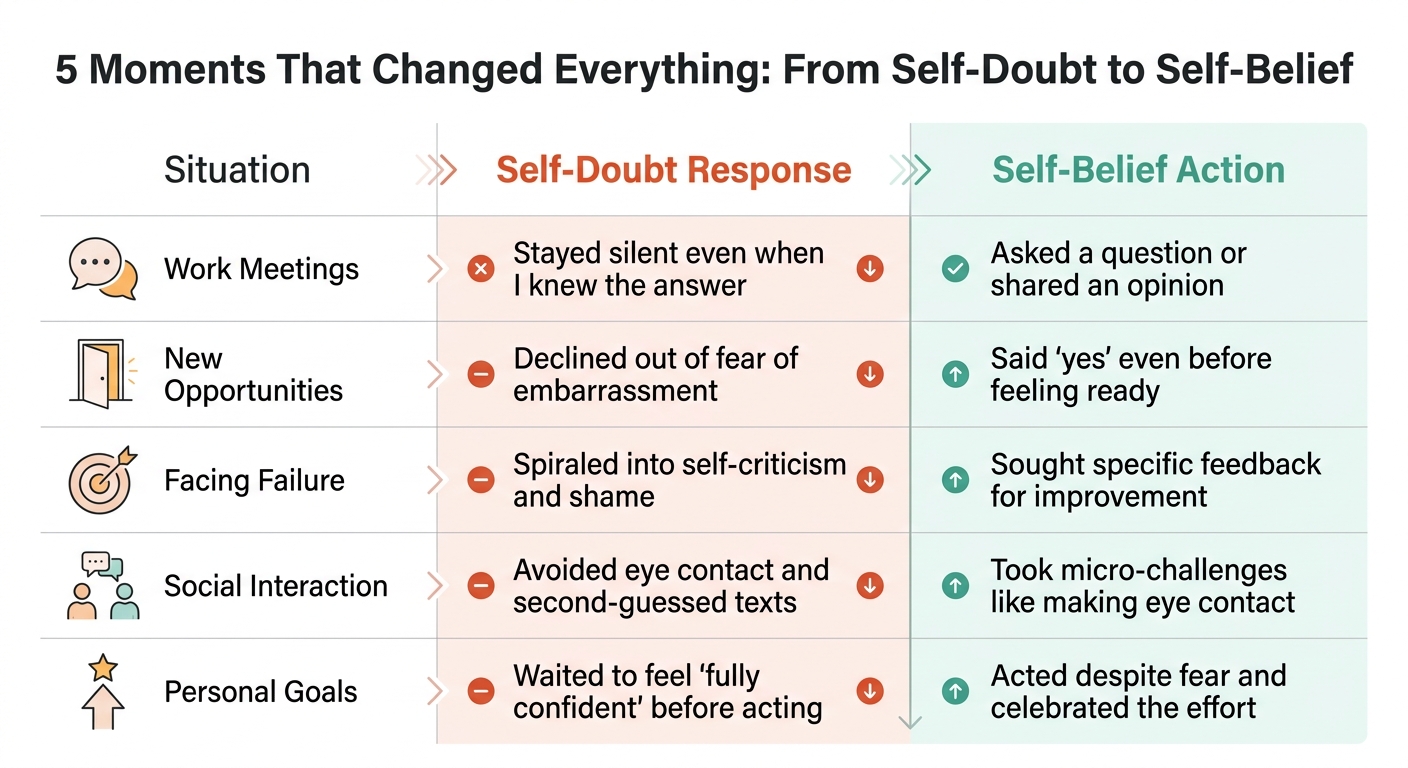
5 Moments That Changed Everything
The journey from self-doubt to self-belief wasn’t instantaneous. It was shaped by specific moments where I consciously chose to act differently:
| Situation | Self-Doubt Response | Self-Belief Action |
|---|---|---|
| Work Meetings | Stayed silent even when I knew the answer | Asked a question or shared an opinion |
| New Opportunities | Declined out of fear of embarrassment | Said "yes" even before feeling ready |
| Facing Failure | Spiraled into self-criticism and shame | Sought specific feedback for improvement |
| Social Interaction | Avoided eye contact and second-guessed texts | Took micro-challenges like making eye contact |
| Personal Goals | Waited to feel "fully confident" before acting | Acted despite fear and celebrated the effort |
Each of these moments taught me that confidence isn’t about the absence of fear - it’s about taking action in spite of it. These experiences reshaped the way I viewed my capabilities and laid the groundwork for a new mindset.
Shifting to a Growth Mindset
One of the most transformative realizations came when I stopped viewing my abilities as fixed traits. For years, I believed that talents were innate and that every mistake was proof I wasn’t "good enough." Embracing a growth mindset - the idea that skills and abilities can be developed through effort and learning - changed everything.
This perspective shift was freeing. Suddenly, failure wasn’t a reflection of my worth; it became a stepping stone for improvement. For example, when I stumbled during a presentation, I asked my manager, "What’s one thing I could improve next time?" That simple question turned what could have been a source of shame into a chance to grow.
I also began practicing self-compassion. Instead of beating myself up over setbacks, I started treating myself with kindness. I reminded myself that I was a work in progress. As Wasif Islam wisely said:
Self-belief doesn't come from perfection; it comes from self-compassion.
Life After the Transformation: What Changed
Shifting from self-doubt to self-belief brought gradual but meaningful changes to my life. It reshaped how I approached challenges, both personally and professionally.
How Self-Belief Improved My Life
The impact of this transformation was undeniable. Professionally, I went from avoiding eye contact in meetings to volunteering for presentations. In March 2023, after months of consistent effort, I finally stepped up to present a project proposal to senior leadership. The positive feedback I received not only boosted my confidence but also opened doors I had once believed were closed. Within a year, I transitioned into a role where I could fully utilize my creative strengths - an opportunity I never thought possible.
This growth extended into my personal life as well. I revived a creative project I had abandoned long ago and began improving my relationships. A key part of this shift was learning to set healthy boundaries. I distanced myself from people who constantly criticized or dismissed my efforts and instead surrounded myself with "builders" - people who saw my potential and celebrated my progress.
One of the most surprising changes was how I began handling compliments. For years, I would deflect them with self-deprecating humor or outright denial. Now, I simply say "thank you." This small but powerful adjustment has deepened my connections with others and helped me accept that I am worthy of recognition.
What You Can Learn from This Journey
If you're looking to build self-belief, start small. Even seemingly minor actions, like talking to a barista when it feels intimidating, can become the foundation for taking bigger risks later. These small victories help challenge the negative stories you tell yourself and create momentum. Focus on progress rather than dramatic leaps - it’s about building, one step at a time.
Surround yourself with people who uplift you. Pay close attention to how you feel after spending time with others. If someone consistently makes you doubt your worth, it’s okay to create distance. Seek out those who encourage and inspire you, even when you struggle to see your own potential.
Daily practices like affirmations or journaling can also help quiet the harsh inner voice. For example, between 2018 and 2020, Seth Schwartz, a professor at the University of Texas at Austin, used daily written affirmations to support his professional goals. During this time, he achieved a 71% success rate on grant applications - securing funding for 5 out of 7 proposals, a significant improvement over the typical 15% success rate for the National Institutes of Health. This practice also played a role in his transition to a new role at UT Austin in spring 2020.
Remember, self-belief isn’t a final destination - it’s something you work on every day. As MIGrowth’s author wisely put it:
Self-belief isn't something you either have or don't have... It's something you create.
You won’t wake up one day feeling completely confident. Instead, you’ll notice small shifts: speaking up when you might have stayed silent, trying something new despite your fears, or simply treating yourself with more kindness. Each small win builds on the last, strengthening the resilience and self-belief that will guide your journey forward.
Conclusion: The Power of Change
This journey wasn’t about one monumental event - it was built on a series of small, consistent choices. The real shift came from viewing failure as a chance to learn, not as a sign of inadequacy. It came from taking action even when I didn’t feel ready and leaning on those who saw my potential when I couldn’t see it myself.
The biggest takeaway? Confidence isn’t an innate trait - it’s a skill you build through intentional practice. Over time, this practice shapes a mindset that turns challenges into opportunities for growth.
Your path may look different, but every small act of bravery adds to your momentum. Each courageous step strengthens your belief in yourself and proves that you can face uncertainty and grow from it.
Self-belief isn’t a one-time achievement - it requires continual effort because self-doubt has a way of creeping back with every new challenge. But every time you choose courage over comfort, you build resilience and remind yourself that you’re capable of handling what’s ahead.
Change is within reach, even if it happens one small, honest step at a time. Staying stuck often costs more than trying, and each step forward prepares you for the next challenge.
FAQs
How do I know if self-doubt is controlling my choices?
Self-doubt can sneak into your life and start dictating your choices, often without you even realizing it. It might show up as underestimating your value, passing up opportunities, or staying silent when you have something to say. Some telltale signs include constantly second-guessing yourself, steering clear of challenges because you're afraid to fail, or feeling overly anxious about making mistakes. Those nagging thoughts like "You're not good enough" can become a major roadblock. The good news? Spotting these patterns is the first step toward breaking free and building confidence.
What are good micro-challenges to start with?
Effective micro-challenges are small, manageable tasks designed to push you just slightly out of your comfort zone. Examples include ordering pizza over the phone without rehearsing, speaking up during meetings, or giving short presentations to small groups. These simple actions, when practiced consistently, help you build confidence step by step.
How can I stop comparing myself to others online?
Recognize that social media usually presents a polished highlight reel, not the full picture of reality. If scrolling leaves you feeling down, consider limiting your time online or following accounts that emphasize honesty and real-life moments. Instead of comparing yourself to others, focus on your own journey and remember that everyone faces their own challenges. Practicing self-compassion and gratitude can help reshape your mindset, turning social media into a tool for motivation rather than a source of comparison.